

Car Won't Start but the Lights Work: What to Check First
Few things are more frustrating than turning the key and hearing nothing while the headlights, dashboard, or radio still work. A car won’t start but the lights work because these accessories need less current than the starter motor. Visible electrical power doesn't prove the battery can start the engine.
Start with a few safe checks before trying again. They can help identify a weak or dead battery, prevent further drain, and show when it is time to call for a tow. If the initial checks don't reveal the problem, an auto electrician can test the starting and charging circuits.
Key Takeaways
Working headlights, dashboard lights, or a radio do not prove the battery has enough power to start the engine.
Listen for clicking, silence, or normal cranking, then check the gear position, key, security light, and battery connections when it is safe.
A jump-start may help identify a weak battery or charging problem, but never jump-start a cracked, leaking, swollen, frozen, or damaged battery.
Stop troubleshooting if there is smoke, a fuel leak, burning odor, damaged wiring, severe weather, or unsafe traffic conditions.
Call for roadside assistance or a tow when the car still will not start, repeated attempts drain the battery, or the vehicle cannot be moved safely.
What to Do If Your Car Won't Start but the Lights Work
First, notice exactly what happens when you turn the key or press the start button. Put the parking brake on, turn off the radio, climate control, chargers, and lights, then make one careful attempt.
Avoid repeatedly turning the ignition. Several failed attempts can weaken an already low battery and may overheat a struggling starter. The sound the vehicle makes gives you a useful starting point.
Listen for Clicking, Silence, or Normal Cranking
A rapid clicking sound often points to low battery voltage. The battery may have enough power for interior lights but not enough current to spin the starter.
One loud click can suggest a starter motor or starter solenoid issue. Complete silence may involve a weak battery, ignition switch, neutral safety switch, or starter circuit problem.
If the engine cranks at its normal speed but never fires, the battery may not be the cause. Fuel delivery, spark, or the vehicle's security system could be preventing the engine from starting.
Try the Simple Gear and Key Checks First
With an automatic transmission, confirm the shifter is firmly in Park. If the area is safe and your foot is on the brake, try starting in Neutral. A worn shifter position sensor can sometimes prevent starting in Park.
For a manual transmission, press the clutch pedal fully to the floor. Also check whether a flashing security light appears on the dashboard, as it may indicate an immobilizer fault. If you have a spare key, try it, especially if the original key is worn or has an immobilizer chip.
Do not attempt to bypass factory anti-theft equipment. That can create more problems and may leave the car unable to start at all.
Check Whether the Battery Is Too Weak to Start the Engine
Watch the headlights while someone tries to start the car. If they dim sharply, the battery may be weak or the connections may not carry enough current.
Look for loose battery terminals or white and blue-green battery corrosion around the cable ends. Do not touch a battery that is swollen, cracked, leaking, smoking, or giving off a strong odor. Keep sparks and cigarettes far away from the engine bay.
A jump start may get the engine running. If the battery is undamaged and your vehicle manual allows it, a portable jump starter can be another option. However, if the problem returns, the battery and charging system need proper testing.
An auto electrician can test low battery voltage and the starting circuit if the symptoms continue. Working lights only show that some battery power remains. Starting an engine requires a much heavier burst of electrical current.
Troubleshoot the Most Likely Causes Before Calling for Help
Once you have checked the gear position, key, and visible battery connections, a jump start can provide another clue. It is not a full diagnosis, but a successful jump may point toward a weak battery or charging issue.
Use a Jump-Start Carefully and Know When to Stop
Check both batteries before connecting anything. Don't jump-start a battery that is cracked, leaking, frozen, badly swollen, or visibly damaged. Keep both vehicles from touching, set their parking brakes, and follow the owner's manual.
A portable jump starter can be useful instead of another vehicle, but inspect the battery first. Many newer vehicles have dedicated jump points, so don't guess where the jumper cables belong. Connect the positive cable to the positive terminals first, then attach the negative lead as the manual directs. Start the assisting vehicle if its manual permits it, then make a limited attempt to start the disabled car.
If it still will not start after a few careful attempts, stop. Repeated cranking can damage the starter motor or drain both batteries. A car that starts after a jump but quickly stalls may also have an alternator or connection problem.
Consider Fuel, Spark, and Starter Problems
Check the fuel gauge before assuming a major failure. A faulty gauge can mislead you, especially when the tank is low. When you switch the ignition on, you may hear a brief fuel pump hum from the rear of many vehicles.
If engine cranking sounds normal, attention shifts away from the battery and toward the fuel or ignition system. A failed fuel pump, clogged fuel filter, or other fuel system fault can prevent starting. Worn spark plugs can also point to an ignition system problem.
A failed starter relay, blown fuse, wiring issue, or security-system fault can leave you stranded. A mechanic or auto electrician can use a battery tester, a multi meter, a scan tool, and other diagnostic tools to evaluate the vehicle's electrical systems. Roadside repairs are rarely the place to test exposed electrical parts or work beneath a vehicle.
Know When to Stop Troubleshooting and Call a Tow Truck
End roadside troubleshooting if you’re in traffic, on a narrow shoulder, in severe weather, or near fast-moving vehicles. If possible, move the car to a safer location, turn on hazard lights, and stay well away from traffic.
Smoke, fuel leaks, burning smells, or damaged wiring are immediate reasons to stop. For drivers across Greater Cincinnati, Day Heights Towing service area coverage includes roadside assistance when conditions are no longer safe to manage alone. An auto electrician may identify or refer an electrical fault for further diagnosis.
Get Help for a Dead Battery, Failed Starter, or Unsafe Location
Call for towing or roadside service when a jump produces repeated clicking, the starter gives one heavy click, or the battery won’t hold a charge. Get help when the engine cranks but doesn’t start, or when the vehicle can’t be moved safely.
Forcing the engine to start can worsen electrical or mechanical damage. When you call, share your location, vehicle make and model, starting symptoms, warning lights, and whether the car is in Park. Tell dispatch if you used a portable jump starter or tried other troubleshooting.
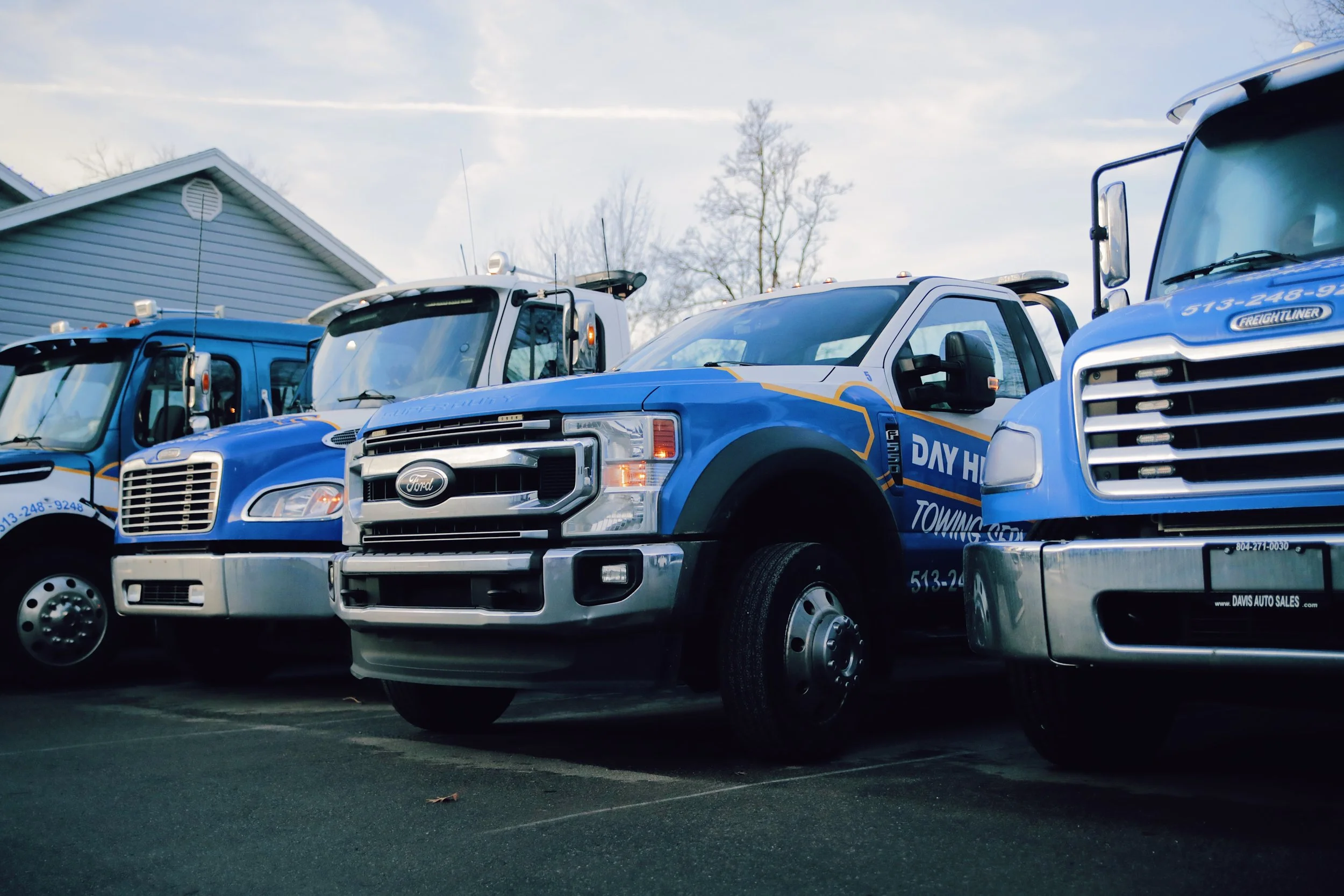
Day Heights Towing provides professional tow truck service for vehicles that need safe transport to a repair shop. The shop may need an auto electrician to diagnose the starter, charging system, or wiring.
Protect the Car While You Wait for the Tow
Lock the vehicle if you need to step away, but remain in a safe place away from moving traffic. Don’t open the hood when you see smoke, smell fuel, or notice damaged battery cables or wiring.
A tow operator can load a vehicle with a failed starter, battery issue, or transmission-related no-start problem without forcing it to run. For added roadside safety guidance, review these breakdown safety tips near Milford.
Frequently Asked Questions
Why won’t my car start if the lights still work?
The lights need much less electrical current than the starter motor. A weak battery, corroded connection, failed starter, or starting-circuit fault can leave the lights working while the engine will not start.
What does it mean when the car only clicks?
Rapid clicking often indicates low battery voltage or poor battery connections. One loud click may point to a starter motor or starter solenoid problem.
Should I try starting the car in Neutral?
If the vehicle has an automatic transmission, you can try starting it in Neutral with your foot firmly on the brake when the area is safe. If it starts only in Neutral, the Park or Neutral safety switch or shifter position sensor may need inspection.
Is it safe to jump-start a car that will not start?
A jump-start may help if the battery is weak and undamaged, but follow the vehicle manual and use the correct jump points. Do not jump-start a battery that is cracked, leaking, swollen, frozen, smoking, or giving off a strong odor.
When should I call a tow truck?
Call for help if the car still will not start after a few careful checks, the battery will not hold a charge, or the starter repeatedly clicks. You should also stop and call for a tow if there is smoke, a fuel leak, damaged wiring, severe weather, or nearby traffic that makes troubleshooting unsafe.
A Safer Next Step When the Car Stays Disabled
Listen to the starting sound, check the gear position, and inspect connections only when it is safe. Attempt a jump-start only with an undamaged battery and the correct procedure.
Working lights don’t rule out a starting-system problem. When the cause is unclear or the location is unsafe, contact Day Heights Towing for prompt help instead of risking further damage or standing near traffic.
After the vehicle reaches a safe repair location, an auto electrician can diagnose an unclear electrical or starting fault.