

Flatbed Towing for Sports Cars: Safe Low-Car Loading
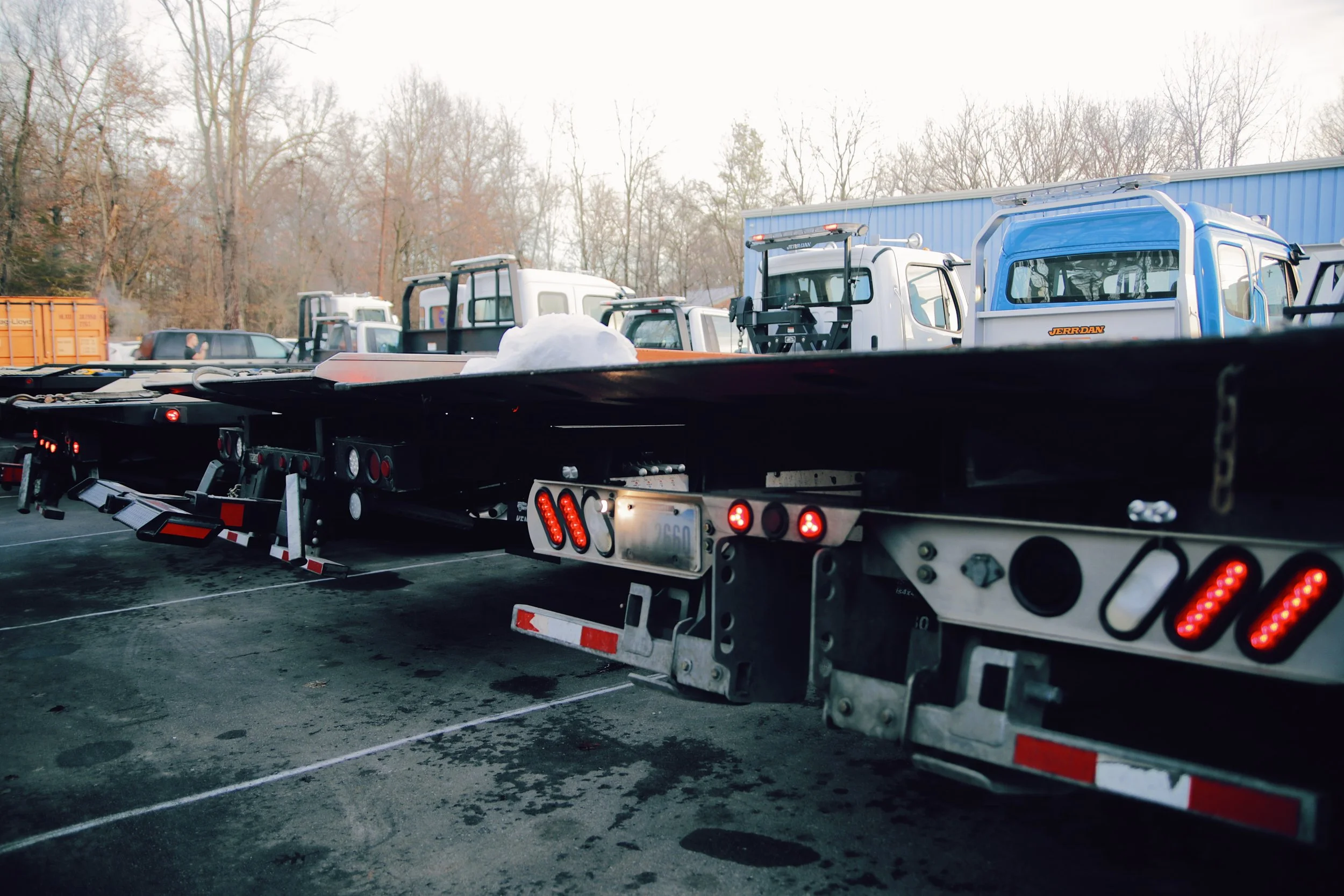
A scraped front splitter or crushed side skirt can cause underbody damage and turn a simple tow into an expensive repair. High-performance cars also risk bent wheels, damaged spoilers, and drivetrain trouble when they need to be moved.
Because these cars sit close to the pavement and often use costly bodywork, flatbed towing sports cars is usually the safer starting point. A flatbed tow truck keeps the vehicle on a level deck, while careful ramp setup and trained handling reduce wear and tear on all four wheels.
Key Takeaways
Flatbed towing is usually the safest option for sports cars because it keeps all four wheels off the road and reduces drivetrain, tire, and bodywork concerns.
Low ground clearance requires careful inspection, gentle ramp angles, extended ramps, and controlled winching to prevent scraping splitters, bumpers, side skirts, and underbody parts.
Operators should use soft straps or wheel nets and secure the vehicle without pressing against painted panels, spoilers, suspension components, or exhaust parts.
Before service begins, provide the car’s make, model, ride height, condition, location, and damage, then confirm that a true flatbed and suitable low-clearance equipment are available.
Ask for a clear estimate because distance, access, winching, weather, timing, storage, and vehicle condition can affect the final towing cost.
Why a Flatbed Is Safer for Performance Cars
A flatbed carries the vehicle with all four wheels off the road. That limits tire wear and avoids unnecessary wear and tear after a breakdown, collision, roadside problem, or long distance towing need.
Compared with a traditional tow truck, a flatbed tow truck provides more control during loading and transport. Two-wheel towing can work for some vehicles when the owner's manual permits it, but it requires extra care with a manual transmission, all-wheel-drive systems, low front splitters, rear diffusers, and limited ground clearance. For many performance cars, flatbed towing sports cars helps reduce drivetrain and tire concerns.
Low Ground Clearance Makes Ordinary Tow Trucks Risky
A steep approach angle can scrape a front lip, exhaust section, underbody panel, or side skirt. Low-profile vehicles may contact the ramp before their tires reach the deck, especially at the base of a dip.
An unsuitable tow setup may also stress tires, suspension components, or the drivetrain. Before moving the vehicle, the operator should inspect it and identify the lowest points, including aftermarket aero pieces and lowered suspension parts.
When a Flatbed Is Better Than a Wheel-Lift Tow
Flatbeds are often practical for modified vehicles, collision-damaged cars, all-wheel-drive models, electric sports cars, classic cars, exotic cars, luxury cars, and hot rods. A winch can move a car that cannot safely drive onto the truck. Equipment sized for a motorhome isn't automatically appropriate for a low sports car.
Still, a wheel-lift isn't automatically wrong. The best method depends on the car's condition, its manufacturer's instructions, and the available equipment. If you need help in Milford or Cincinnati, review Day Heights Towing's vehicle towing options before requesting service.
How Professionals Load a Low Sports Car Without Scraping It
Safe loading starts before the winch moves. The flatbed tow truck needs stable positioning, the vehicle needs a clear path, and the operator needs to know whether it rolls, steers, and has damaged components.
The Inspection and Ramp Setup Come First
The operator should document visible damage, check the tires, and look for fluid leaks or loose panels. They should also confirm the transmission setting, including neutral for a manual transmission, and whether the parking brake can be released.
A level work area reduces the chance of a sudden angle change. For low-profile vehicles, extended ramps and low-angle loading ramps create a gentler path onto the deck. The goal is to keep the bumper, splitter, and underbody from meeting the ramp. A flatbed protects a low car only when the loading angle and approach surface suit the vehicle's actual clearance.
The driver's manual should guide attachment points and transport settings. Lowered cars, wide-body kits, and aftermarket exhausts may need extra clearance planning.
Winching and Securing Require the Right Equipment
On a flatbed tow truck, a controlled winch moves the car slowly instead of relying on acceleration or sudden pulling. This process offers more control than a traditional tow truck setup. Depending on the vehicle and recovery plan, an operator may use soft straps or a wheel net, which help avoid contact with paint or bodywork.
Tie-downs should restrain the tires without pressing against painted panels, spoilers, suspension arms, or exhaust components. After loading, the operator should check strap tension, wheel placement, transmission setting, parking brake instructions, and clearance around the car.
Owners should stay clear while loading takes place. Don't climb onto the flatbed or try to guide the vehicle by hand, since a moving car, ramp, or winch line can cause serious injuries.
How to Choose a Towing Team for a Low or High-Value Car
The equipment matters, but communication matters too. Tell the dispatcher the exact make, model, ride height, location, tire condition, and damage, then ask whether a flatbed tow truck is available.
Vehicles such as high-performance cars and luxury cars may require specialized loading. Day Heights Towing provides a light- and medium-duty towing service and accident recovery for Milford, Cincinnati, and the Greater Cincinnati area. The company also states that its operators are licensed and trained for secure vehicle transports.
Questions to Ask Before the Truck Arrives
Ask whether the company can send a true flatbed and whether the operator can accommodate a low-clearance vehicle. Confirm whether the quoted equipment is a traditional tow truck or another suitable setup.
Also ask how the vehicle will be secured and whether special ramps, winching, or difficult access could add to the cost. If enclosed protection matters, ask about a covered trailer instead of a standard flatbed.
Confirm the estimated arrival time, payment options, and expected price. Remove personal belongings, keep the key available, and share access instructions for a garage or gated lot. This guide on requesting low-clearance towing can help you prepare the details.
What Affects the Cost of Flatbed Towing
For planning purposes, a local flatbed tow truck call may often cost about $125 to $300. Difficult recoveries, after-hours work, or longer car transport can reach several hundred dollars or more.
These are general planning ranges, not a guaranteed Day Heights Towing price. Distance, access, vehicle condition, winching, storage, weather, and timing determine the final quote. Equipment class can also affect pricing, but a motorhome-capable setup isn't automatically the right choice for a low car.
Request a clear estimate before service begins. Ask which charges are included and which circumstances could create an additional fee.
What to Do While You Wait for the Tow Truck
Move to a safe location if the car can be parked without further damage. On a busy road, stay away from traffic and road debris, and avoid crawling under the vehicle to inspect the underside.
Take clear photos of the car, including the wheels, front bumper, and existing damage. Relay changes to the dispatcher, such as a locked wheel, flat tire, fluid leak, or steering problem, so a flatbed tow truck arrives prepared. Don’t assume a traditional tow truck can safely handle a low-clearance or damaged vehicle.
For 24/7 assistance across Greater Cincinnati, Day Heights Towing can be reached at (513) 248-9248. Clear details help the team arrive prepared for the vehicle’s needs.
Frequently Asked Questions
Is flatbed towing best for a low sports car?
In most cases, yes. A flatbed keeps all four wheels off the road and allows the operator to manage loading, clearance, and tie-down placement more carefully.
Can a sports car be loaded without scraping the front splitter?
Yes, when the truck is positioned on a suitable surface and the operator uses extended or low-angle ramps. Slow winching and careful clearance checks help protect the splitter, bumper, exhaust, and underbody.
Is a wheel-lift tow truck safe for a sports car?
It can be appropriate for some vehicles if the manufacturer permits it and the equipment suits the car. However, flatbed towing is often preferable for low-clearance, all-wheel-drive, modified, damaged, or high-value vehicles.
How much does flatbed towing for a sports car cost?
A local flatbed tow may often cost about $125 to $300, while difficult recoveries or longer transport can cost several hundred dollars or more. The final price depends on distance, access, winching, vehicle condition, timing, weather, and storage.
Protect Your Sports Car Before It Moves
A flatbed tow truck is often the safest choice for a low sports car. It provides level-deck transport and limits road contact, unlike a traditional tow truck that may leave wheels on the road. Safe transport also depends on inspection, ramp angle, slow winching, and correct tie-downs.
When you call Day Heights Towing, explain your car's clearance, condition, location, and any damage. This preparation also helps with luxury cars and hot rods, which may require careful clearance checks and tie-down planning.