

Vehicle Towing Basics: When a Winch-Out Is Safe
Getting stuck can feel worse than it looks. One tire slides off a soft shoulder, or your car settles into snow, and suddenly you're not sure what kind of help you need.
For Cincinnati area drivers, the good news is that many stuck-vehicle calls don't end with a trip to the shop. A winch-out is often enough to pull a working car back onto firm ground so you can drive away safely.
The key is knowing when a tow truck can do that safely, and when the situation needs a different kind of recovery.
What a winch-out really means in vehicle towing
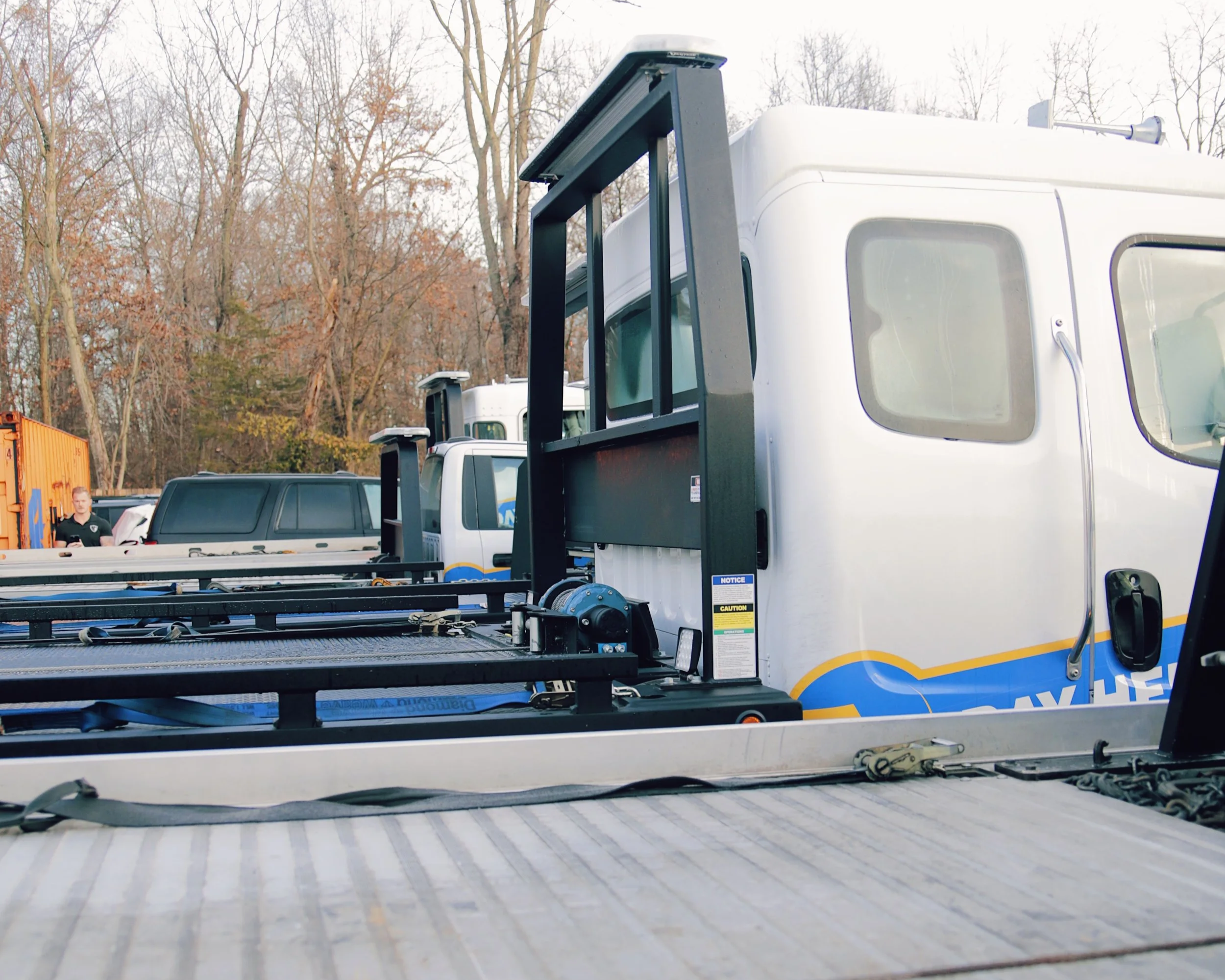
In plain terms, a winch-out is a controlled pull. A tow truck uses a powered winch, cable, or recovery rope to pull a stuck vehicle back to stable ground. The car usually stays on its own wheels during the process, and the goal is simple: get it unstuck without causing more trouble.
This kind of vehicle towing is common when a car slips into mud, gets hung up in snow, drops into a shallow ditch, or sinks on a soft shoulder. In many of those cases, the vehicle still runs fine. It just can't get traction.
A full tow is different. That usually means the vehicle can't be driven safely, so the truck lifts it and moves it to another location. A safe winch-out is a steady pull, not a hard jerk.
That difference matters because the setup, the risk, and the outcome are all different.
How a recovery truck pulls a stuck vehicle free
First, the operator checks the scene. They look at traffic, ground conditions, the angle of the vehicle, and whether the truck itself has a safe place to park.
Next, they choose a proper recovery point on the stuck vehicle. That may be a factory tow hook or another rated attachment point. Then they position the truck on firm ground and run the winch line in the safest direction possible.
Sometimes the pull is straight. Other times, the operator uses extra recovery gear, such as a snatch block, to change the angle or add control. Then the winch applies slow, even tension. The goal is to guide the vehicle out, not shock it loose. If the setup shifts or the ground gives way, the operator stops and re-checks everything.
Why a winch-out is not the same as a tow to the shop
A winch-out gets a stuck vehicle free. A tow moves a vehicle that can't travel safely on its own.
That means the right service depends on the problem. If your car is stuck in mud but still drives, a winch-out may be enough. If it's damaged, flooded, won't start, or can't roll safely, it likely needs a full tow.
In other words, being stuck and being disabled are not the same thing.
When a tow truck can pull you out safely
A standard winch-out works best when the situation is simple and stable. The tow truck needs solid ground under its own tires. The stuck vehicle should have a clear path out, usable recovery points, and no major damage that could make pulling unsafe.
That's why many snow, mud, gravel, and shallow ditch recoveries go smoothly. The truck can anchor itself, the operator can control the line, and the vehicle can return to the road without being lifted.
Still, some scenes cross the line from routine to risky. Deep water is a major red flag. So is a steep embankment, a rollover, heavy crash damage, or ground so soft that the recovery truck could sink too. If the vehicle has a bent frame, broken suspension, or damaged wheels, a simple pull can make things worse.
Safe situations where a winch-out usually makes sense
Most safe winch-out calls have one thing in common: the vehicle is stuck, but not wrecked.
That includes a sedan that slid into a snowy shoulder, an SUV buried in spring mud, or a pickup sitting at the edge of a roadside ditch. In each case, the car may still start, steer, and brake. It simply can't get enough grip to move on its own.
Those are usually the best cases for a tow truck recovery. The operator can park securely, set the line, and pull the vehicle back where the tires belong. After that, the driver may be able to continue home, work, or wherever they were headed.
When the situation calls for more than a simple pull
Some jobs need heavier recovery equipment or a full tow. Flooded vehicles are a clear example because water can damage electronics, brakes, and engines. Rollover accidents are another, since the weight shifts in ways that make a basic pull unsafe.
The same goes for unstable slopes, deep ditches, weak anchor points, and vehicles with major body or frame damage. If the truck can't get solid footing, the safest move may be to stop and use a different method.
That judgment protects everyone nearby. It also protects the vehicle from extra damage during recovery.
How to stay safe before and during recovery
If your car gets stuck, the first few minutes matter. Many drivers make the problem worse by spinning the tires harder. That can dig the vehicle deeper into mud or snow and reduce the chance of a quick recovery.
Start by staying calm. Turn on your hazard lights, take a look around, and think about traffic first. On a busy road, it's often safer to stay inside the vehicle with your seat belt on than to stand near moving cars.
What drivers should do right away after getting stuck
A few simple steps can make the recovery safer and faster:
Stop spinning the wheels once you realize the car isn't moving.
Check for hazards such as traffic, water, ice, or a steep drop nearby.
Move passengers to a safer spot only if the area around the car is clearly safe.
When you call for help, describe the surface and location clearly, such as mud, snow, gravel, or a ditch.
That last part helps more than people think. A clear description tells the towing company what truck and gear may be needed.
What never to do during a winch-out
Once help arrives, give the operator room to work. Don't stand near the cable or between the tow truck and your vehicle. If a line or connection fails under tension, it can snap back with force.
Also, don't ask someone to yank your car free with a regular strap and a pickup. That kind of pull is hard to control, and weak attachment points can break. Bumpers, suspension parts, and trailer balls are not safe recovery points for a stuck-car pull. During recovery, the safest place is well away from the line and in full view of the operator.
Most importantly, follow directions. You may be asked to steer, brake lightly, or keep the car in neutral. Small actions matter when a recovery truck is pulling a vehicle inch by inch.
Conclusion
A winch-out is for a vehicle that's stuck but still usable. A full tow is for a vehicle that can't move safely on its own.
That difference helps you know what kind of help to expect when your car ends up in snow, mud, or a ditch around Cincinnati. When the scene is assessed by a trained operator, vehicle towing becomes a lot less stressful, and a lot safer for you, your car, and everyone around you.