

Flat Tire on the Roadside: Change It or Call for Help?
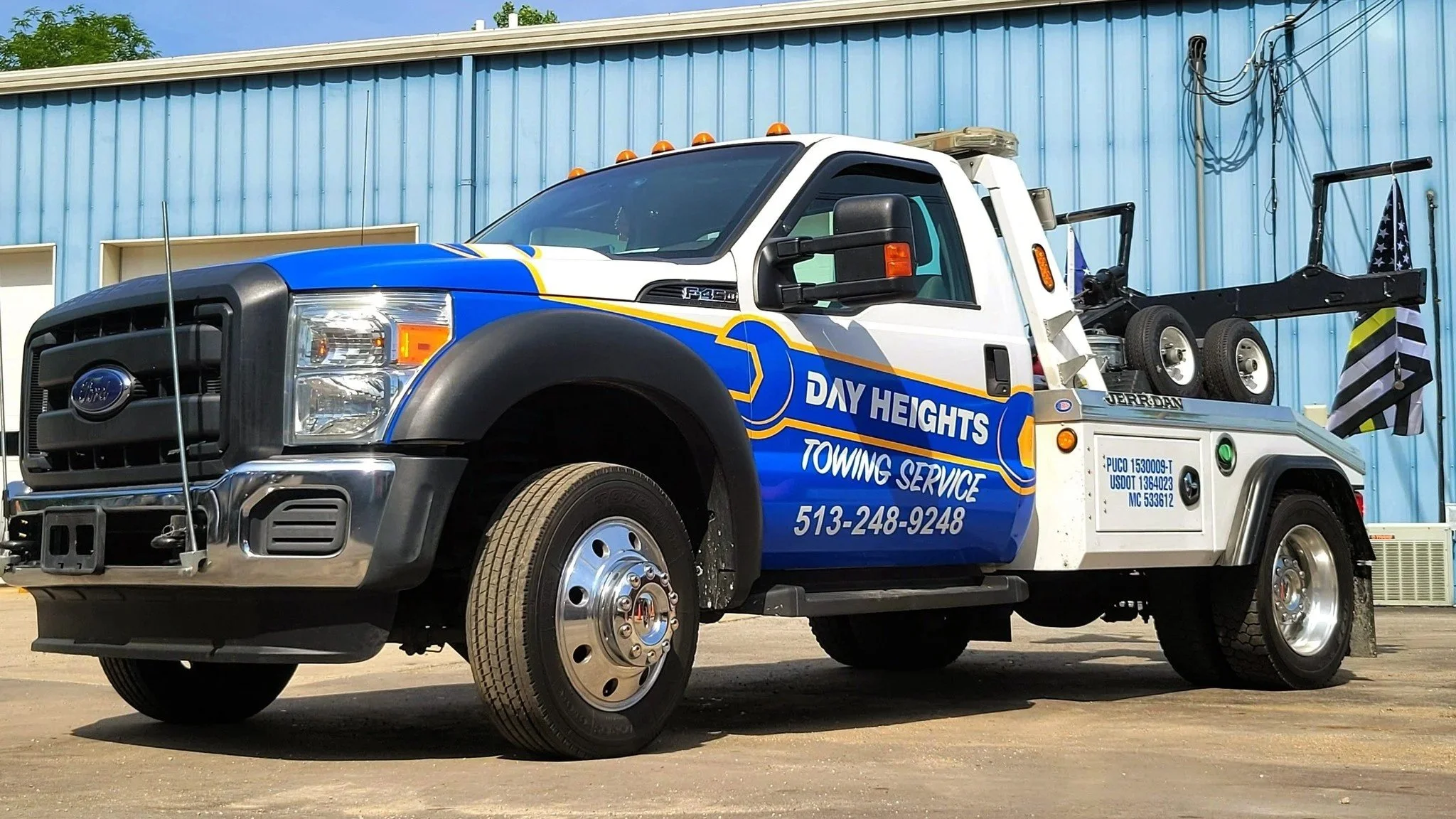
A flat tire can turn a normal Cincinnati drive into a tense few minutes fast. One second you're headed down I-275 or a local Milford road, and the next you're gripping the wheel and looking for a safe place to stop.
In that moment, the goal isn't to prove you can handle it alone. The goal is safety. Weather, traffic, shoulder space, tools, and confidence all matter, and so do your towing options if the spot or the damage looks risky.
Before you grab the jack, take a breath and size up the scene.
Start with safety before you even reach for the jack
The first decision isn't how to change the tire. It's whether you should get out of the vehicle at all.
Look at traffic speed first. A wide shoulder on a quiet road is one thing. A narrow strip beside fast-moving traffic is another. Then check the ground. If the surface slopes, crumbles, or feels soft, a jack can shift when the car is lifted.
Light matters too. In daylight, drivers can usually see you sooner. At night, even hazard lights may not give you enough protection, especially near curves or hills. Rain, snow, and ice also change the math because passing cars need more distance to stop.
Personal safety comes before saving money or time. If changing the tire puts you inches from traffic, it's not worth the risk.
Signs the roadside is safe enough for a basic tire change
Some flat tires happen in spots where a careful driver can handle the job. That's most likely when your vehicle is fully out of the travel lane, the shoulder is wide, and traffic can clearly see you.
Good visibility helps a lot. So does calm weather. A flat, solid surface, such as dry pavement, gives the jack a better base. Before doing anything else, turn on your hazard lights, set the parking brake, and stay alert to what's happening around you.
If you have passengers, keep them away from traffic. In many cases, the safest place is inside the vehicle or well off the road, depending on the location.
Red flags that mean you should stay in the car and call for help
Some scenes are bad news right away. Heavy traffic, narrow shoulders, blind curves, hills, poor lighting, and active construction zones all raise the danger.
Rain makes visibility worse. Snow and ice make the ground slick. Loose gravel and soft dirt can let the jack sink or tilt. If the vehicle can't be moved far enough from passing cars, that's another clear stop sign.
Wheel damage matters too. If the rim looks bent, the tire blew apart, or parts around the wheel seem damaged, this may not be a simple swap.
If the roadside feels unsafe, that feeling is enough reason to call for help.
When changing the tire yourself makes sense
There are times when a roadside tire change is reasonable. If the area is safe, the damage is minor, and you're prepared, doing it yourself can get you moving again without a long delay.
Still, this only works when the basics are in place. A flat tire isn't like changing a light bulb in your garage. Cars are heavy, roads are unpredictable, and rushing leads to mistakes.
You have the right tools, the right tire, and a safe place to work
Start with the obvious question: do you even have a usable spare? Many drivers assume they do, then find out their car came with a repair kit, a temporary spare, or nothing at all.
You also need a jack that fits your vehicle, a lug wrench, and ideally gloves, a flashlight, and wheel wedges. Your owner's manual matters because jack points vary by vehicle. Put the jack in the wrong spot and you can damage the car or create an unstable lift.
Check the spare's air pressure if you can. A flat spare solves nothing. If you want backup nearby, 24/7 roadside assistance in Cincinnati can be a better call than wrestling with bad tools on the shoulder.
You know the basics and can finish the job without rushing
Confidence matters, but only if it's based on real know-how. You should know how to loosen lug nuts before lifting the car, place the jack at the correct point, install the spare, and tighten the lug nuts evenly.
Don't crawl under the vehicle. Don't keep going if the car wobbles on the jack. If anything feels off, stop.
A spare tire is also not a long-term fix. Many compact spares have speed and distance limits. Follow the manufacturer's directions, then get the damaged tire repaired or replaced as soon as possible.
Think of a spare like a bridge, not a destination. It gets you across the problem, not past maintenance.
When calling roadside help or a tow truck is the smarter move
Calling for help isn't giving up. In many cases, it's the safer and faster choice.
Professional roadside service reduces the time you spend exposed to traffic. It also helps when the issue looks small at first, but turns out to be something more than a flat. That's where good towing options make a real difference.
Problems that go beyond a simple flat tire
Sometimes the tire isn't the only problem. Bent rims, stripped lug nuts, missing tools, or a spare that won't come loose can stop a roadside change cold.
A blown tire may damage nearby parts. Some vehicles have locking lug nuts, and if the key is missing, the wheel isn't coming off. Other cars are packed so tightly with cargo that you can't reach the spare without unloading half the trunk on the roadside.
Newer vehicles can add extra steps too. If you aren't sure about the process, it's smarter to wait for trained help than guess your way through it.
Why professional help is often best in busy Cincinnati traffic
Cincinnati roads can go from manageable to rough in a hurry. Highways like I-71, I-75, and I-275 move fast, and construction can squeeze shoulders down to almost nothing. Add sudden rain or winter ice, and a tire change becomes a roadside gamble.
In those moments, a tow truck or roadside tech can cut down the time you're standing near traffic. That's not a small benefit. It's often the main reason to call. If you're unsure whether help reaches your area, check Day Heights' Greater Cincinnati service regions.
The smartest move is the one that gets you off the roadside with the least risk.
A flat tire doesn't have to turn into a bigger emergency. If the shoulder is wide, the ground is solid, the weather is calm, and you have the right gear, changing it yourself may be fine.
But if any part of the scene feels risky, call for help. Safety beats pride every time, and Cincinnati drivers don't have to handle a roadside tire problem alone.