

A car that won't start on a cold morning can derail your day before you leave the driveway. Cold weather reduces a battery's available starting power, but a no-start can also mean a battery problem or another vehicle fault.
A jump-start may get you moving, while other situations need repair or towing. The first decision is whether attempting a jump is safe. Start with the battery's visible condition and your surroundings, then use what happens next to decide whether roadside help or a repair-shop visit makes more sense.
Key Takeaways
Cold temperatures reduce a battery's starting power. AAA says a battery loses about 35% of its strength at 32°F and about 60% at 0°F.
A jump-start may help if the battery appears intact, the vehicle is safely parked, and the owner's manual permits the procedure.
Don't jump-start a cracked, leaking, swollen, or frozen battery. Stop if wiring is damaged or you can't follow the instructions confidently.
Repeated no-starts can point to a battery problem, a faulty starter motor, or alternator trouble. Get a repair diagnosis before replacing the battery.
Arrange a tow if a safe jump attempt fails or traffic, weather, or battery damage makes roadside troubleshooting unsafe.
Dead Battery in Cold Weather: Jump-Start or Replace?
Cold temperatures reduce a battery's starting power, while the engine needs more effort to turn over. Battery capacity and condition matter, and cold cranking amps describe a 12-volt battery's starting capability. According to AAA's cold-weather guidance, a battery loses about 35% of its strength at 32°F and about 60% at 0°F.
That explains why freezing weather can expose starting trouble. However, temperature alone doesn't establish that you need a replacement.
Signs a jump-start may be all you need
A roadside jump-start is an option when the battery appears intact, the vehicle is safely parked, and its instructions permit the procedure. Roadside assistance may resolve a straightforward no-start without towing. A portable jump starter is another option when the vehicle manual permits its use.
Working headlights or a functioning radio don't rule out battery trouble. The no-start guide for working lights explains why those symptoms still need attention.
Clues your battery may need replacing
Visible damage calls for professional attention rather than another starting attempt. A cracked, leaking, swollen, or frozen battery is unsafe to jump-start.
Repeated no-starts also deserve a repair diagnosis. Describe when the trouble occurs and what happens when you try to start the vehicle. That information helps the shop investigate the problem without treating every winter breakdown as an automatic battery purchase.
How to use a jump-start to check a weak battery
Before connecting anything, read the vehicle's owner's manual and the jump-starter instructions. Guidance for an electric vehicle can differ, so follow the manufacturer's directions exactly. Consumer Reports' guide to using jumper cables provides additional preparation guidance, but vehicle-specific instructions come first.
Jump-start safely, then watch what happens
Choose a jump starter with peak amps and compatibility suited to your vehicle. Portable units may use a lithium-ion battery. A jump-starter's 12V accessory port isn't necessarily an approved way to start a vehicle, so check the vehicle and equipment manuals.
Use equipment suitable for the vehicle, and follow its specified connection points and procedure. Don't improvise when a terminal or connection point is unclear. Professional roadside assistance is the safer choice when you're uncertain.
Inspect the battery before proceeding. AAA's jump-start safety guidance warns against attempting a jump-start on a frozen battery. Cracks, leakage, swelling, or other damage also mean stop.
Reverse polarity can damage the equipment or vehicle. Spark-proof clamps don't make it safe to ignore instructions or connect to a damaged or frozen battery.
Follow these standard steps for checking a weak battery safely:
Read the vehicle owner's manual and jump-starter equipment instructions thoroughly before beginning.
Inspect the battery exterior for any signs of cracks, leaks, swelling, or freezing.
Attach the battery clamps to the specified battery terminals in the exact order required by the manufacturer.
Start the helper vehicle or portable pack, then attempt to start the disabled vehicle.
Monitor the dashboard immediately upon starting for any warning lights, smoke, or unusual smells.
If the vehicle starts, pay attention to warning lights, unusual smells, and how it runs. Smoke or a burning odor means you should stop troubleshooting and get help.
Know when a jump-start is not the right move
Don't continue if wiring is damaged or you cannot confidently follow the instructions. Repeated attempts can drain the battery further without resolving the problem.
If the car still won't start after a properly performed attempt, arrange assistance. Likewise, don't stand beside fast-moving traffic to keep trying. Your position on the road can make an otherwise routine battery problem unsafe to handle yourself.
When a jump-start battery test points to a replacement
A replacement decision should follow a repair diagnosis, not the weather forecast. Tell the shop whether this was an isolated no-start or a recurring problem, and whether roadside assistance was needed.
Keep the symptoms clear. "The dashboard lights came on, but the engine wouldn't start" gives the shop more useful information than "the battery is dead." Also mention warning lights, unusual odors, or visible damage. Those details describe what happened without assuming which component caused it.
A faulty starter motor or alternator can also leave a vehicle stranded. Buying a battery before the cause is identified may leave the original problem unresolved.
For an unresolved no-start, choose a repair destination where the vehicle can receive attention. A tow gets it there without further roadside attempts. If the shop recommends replacement, have the damaged or faulty battery handled as part of that repair.
Until then, leave a visibly damaged battery alone. Don't disconnect, move, or attempt to jump it simply to avoid arranging transportation.
When to call a tow service instead of trying again
Call for towing when a safe jump attempt doesn't get the vehicle running, or when battery damage makes an attempt unsafe. Suspected freezing is also a reason to stop.
Location matters just as much. A narrow shoulder, severe weather, or nearby moving traffic can make troubleshooting too risky. Don't attempt repairs in an active lane. If the vehicle creates an immediate traffic hazard, contact emergency services as appropriate.
Starter failure and alternator trouble are also common reasons for a breakdown tow to a repair shop. Towing avoids repeated roadside attempts when the underlying issue needs repair.
When arranging help, give dispatch your exact location, vehicle make and model, and starting symptoms. Explain whether you've already tried a jump and whether the battery appears damaged. Mention tight parking, a garage, or other access restrictions.
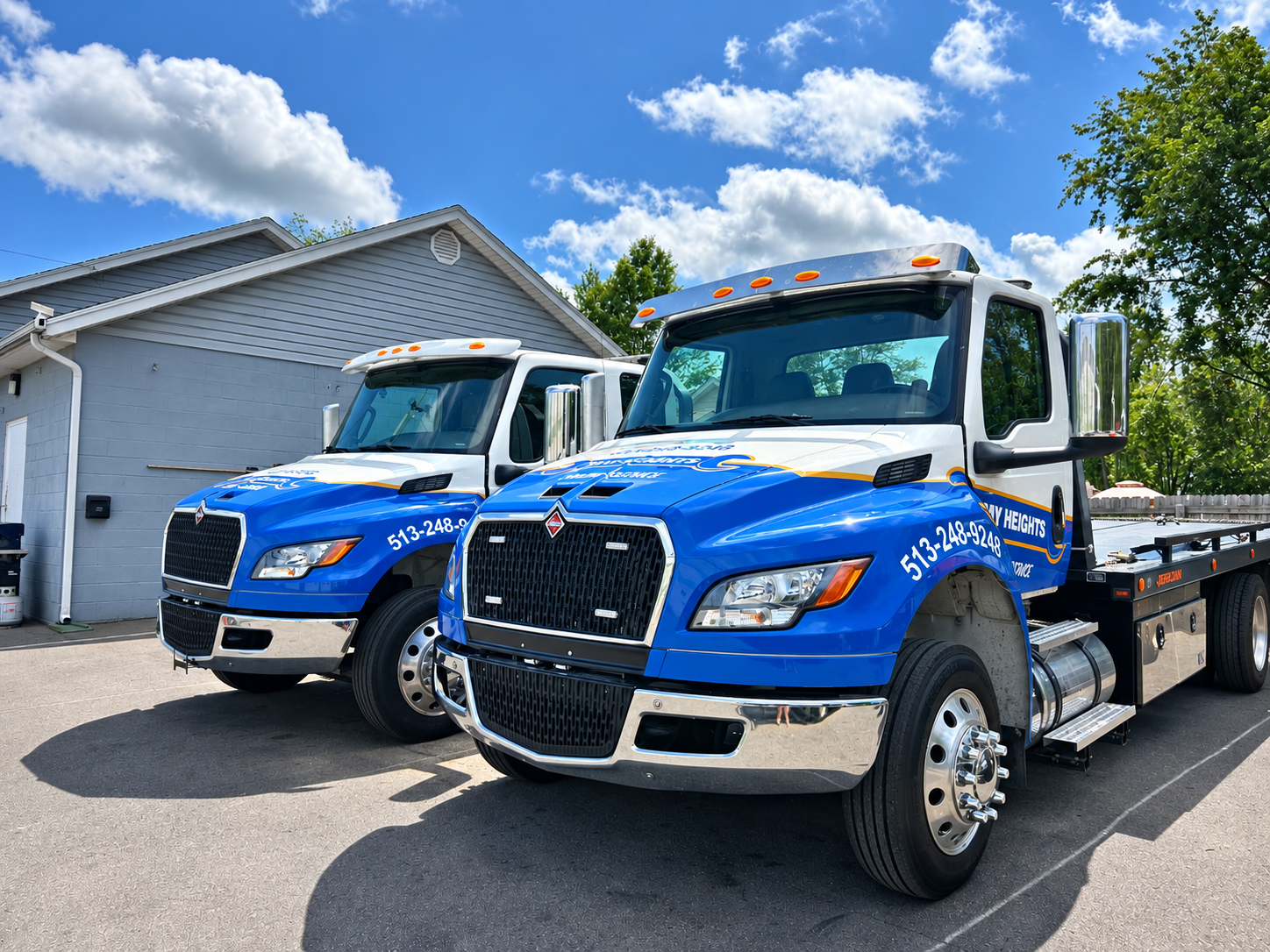
Those details help the towing service prepare for the vehicle and its surroundings. For drivers in Milford and Greater Cincinnati, Day Heights Towing Service provides towing assistance for stranded vehicles.
Frequently Asked Questions
Does cold weather mean my car battery needs replacing?
No. Cold weather reduces a battery's starting power, but temperature alone doesn't show that the battery needs replacement. Repeated no-starts call for a repair diagnosis.
When is it safe to jump-start a car in cold weather?
A jump-start may be an option if the battery appears intact, the vehicle is safely parked, and the vehicle and equipment manuals permit the procedure. Don't attempt one if the battery is cracked, leaking, swollen, or frozen.
What should I do if my car still won't start after a jump?
Arrange assistance rather than making repeated attempts. A faulty battery, starter motor, or alternator may need diagnosis, and a tow can take the vehicle to a repair shop.
When should I call for a tow instead of trying to jump-start again?
Call for a tow if a safe jump attempt doesn't start the vehicle or battery damage makes a jump unsafe. A narrow shoulder, severe weather, or nearby traffic can also make roadside troubleshooting too risky.
Make the next step a safe one
Cold weather can explain reduced starting power, but it doesn't settle whether you need a new battery. A roadside jump may get the vehicle moving. Recurring failures need a repair diagnosis.
Visible damage, suspected freezing, or unsafe traffic conditions mean you should stop attempting a jump. Protecting yourself matters more than another roadside attempt.
If your vehicle remains stranded, arrange towing to a repair shop so the problem can receive attention away from traffic.